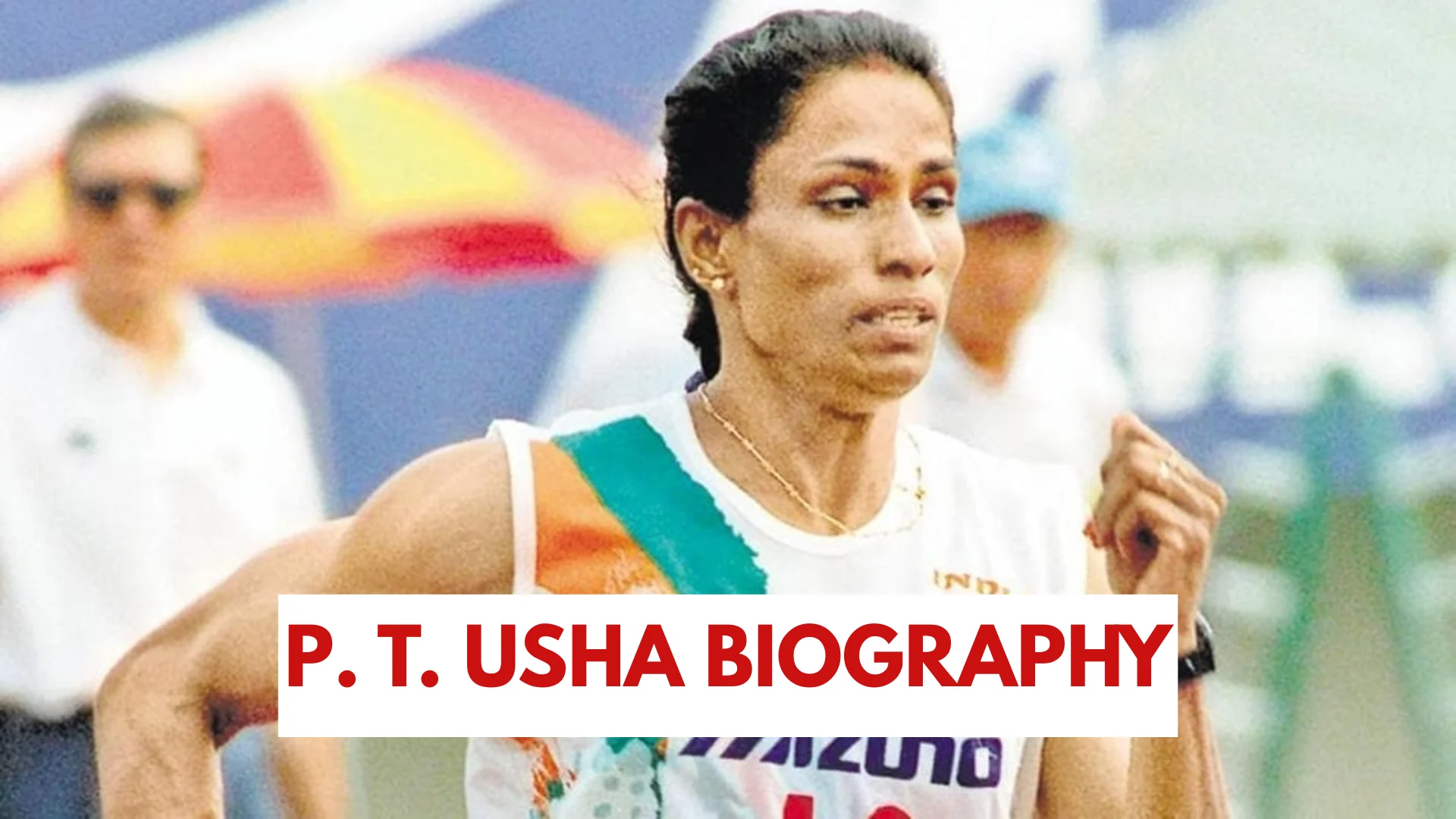
Pilavullakandi Thekkeparambil Usha, popularly known as P. T. Usha, is one of the most iconic athletes in Indian sports history. Often referred to as the “Queen of Indian Track and Field” and the “Golden Girl of Indian Athletics,” P. T. Usha’s journey from a small village in Kerala to the world’s biggest sporting arenas is nothing short of inspirational. Her dedication, discipline, and never-give-up spirit transformed Indian athletics and inspired generations of young athletes.
Born in a time when sports infrastructure and support for female athletes in India were extremely limited, P. T. Usha carved her own path through sheer determination. She dominated Asian athletics for over two decades and brought global recognition to Indian track events.
Early Life and Background
P. T. Usha was born on May 20, 1964, in Payyoli, a small town in Kozhikode district, Kerala, India. She grew up in a modest family where resources were scarce, but her natural talent for running was evident from a very young age. Usha lost her father early in life, and her mother played a crucial role in encouraging her athletic ambitions despite social and financial challenges.
Her life took a turning point when renowned athletics coach O. M. Nambiar noticed her talent. Under his guidance, Usha received structured training, discipline, and international-level exposure that shaped her into a world-class athlete.
Rise in Indian Athletics
P. T. Usha first gained national attention in 1979 when she performed exceptionally well at the National School Games. Her speed, agility, and endurance set her apart from her peers. Soon after, she began representing India at international competitions.
Her breakthrough came at the 1982 Asian Games in New Delhi, where she won two silver medals in the 100 meters and 200 meters events. This performance marked the beginning of her dominance in Asian athletics.
Olympic Journey and the Historic 1984 Los Angeles Olympics
The most defining moment of P. T. Usha’s career came at the 1984 Los Angeles Olympic Games. She competed in the 400 meters hurdles, an event that demanded not just speed but perfect technique and timing.
In one of the closest finishes in Olympic history, Usha finished fourth, missing the bronze medal by just 1/100th of a second. Although she narrowly missed a medal, her performance captured the hearts of millions of Indians and earned her immense respect worldwide. She became a national hero overnight, symbolizing courage and perseverance.
Asian Games and Asian Championships Dominance
P. T. Usha’s dominance in Asia was unparalleled. At the 1986 Asian Games in Seoul, she delivered one of the greatest performances by an Indian athlete, winning four gold medals and one silver medal. She excelled in events such as:
- 200 meters
- 400 meters
- 400 meters hurdles
- 4×400 meters relay
She continued her winning streak at the Asian Championships, securing multiple gold medals across different editions. Her versatility across sprint and hurdle events made her unique among international athletes.
Records and Achievements
Throughout her illustrious career, P. T. Usha set and broke numerous national and Asian records. Some of her most notable achievements include:
- Over 100 international medals in her career
- Asian Games gold medalist multiple times
- National record holder in several sprint and hurdle events for many years
- Arjuna Award recipient
- Padma Shri awardee
Her records stood the test of time and inspired a new generation of Indian track athletes.
Awards and Honors
P. T. Usha has been honored with several prestigious awards for her contribution to Indian sports:
- Arjuna Award (1983)
- Padma Shri (1985)
- Named among the greatest Asian athletes of the 20th century
- Multiple lifetime achievement awards
In 2022, she achieved another historic milestone by becoming the first woman President of the Indian Olympic Association (IOA), further cementing her legacy in Indian sports administration.
Life After Competitive Athletics
After retiring from professional athletics, P. T. Usha remained deeply connected to sports. In 2002, she founded the Usha School of Athletics in Kerala. The academy focuses on identifying and nurturing young talent from across India, especially from underprivileged backgrounds.
Many athletes trained at her academy have gone on to represent India at national and international levels, proving her lasting impact on Indian athletics.
Personal Life
P. T. Usha is married to V. Srinivasan, and the couple has a son named Umesh. Despite her global fame, she is known for her humility, discipline, and simple lifestyle. She continues to serve as a role model for women, athletes, and leaders across the country.
Legacy and Impact
P. T. Usha’s legacy extends far beyond medals and records. She changed the perception of women in Indian sports and proved that athletes from small towns could compete on the world stage. Her life story is a testament to hard work, resilience, and unwavering focus.
Even today, she remains a symbol of excellence, inspiring millions to chase their dreams against all odds.
FAQs
Q1. Who is P. T. Usha?
P. T. Usha is a legendary Indian track and field athlete known as the Golden Girl of Indian Athletics.
Q2. When was P. T. Usha born?
She was born on May 20, 1964, in Payyoli, Kerala, India.
Q3. What is P. T. Usha famous for?
She is famous for her performances in sprint and hurdle events, especially at the Asian Games and the 1984 Olympics.
Q4. Did P. T. Usha win an Olympic medal?
No, she narrowly missed an Olympic medal in 1984 by 1/100th of a second.
Q5. What awards has P. T. Usha received?
She has received the Arjuna Award, Padma Shri, and several lifetime achievement honors.
Conclusion
P. T. Usha’s biography is a powerful story of determination, discipline, and excellence. From a small village in Kerala to the global athletics arena, her journey continues to inspire generations. She is not just a sports icon but a national treasure whose contributions to Indian athletics will be remembered forever.