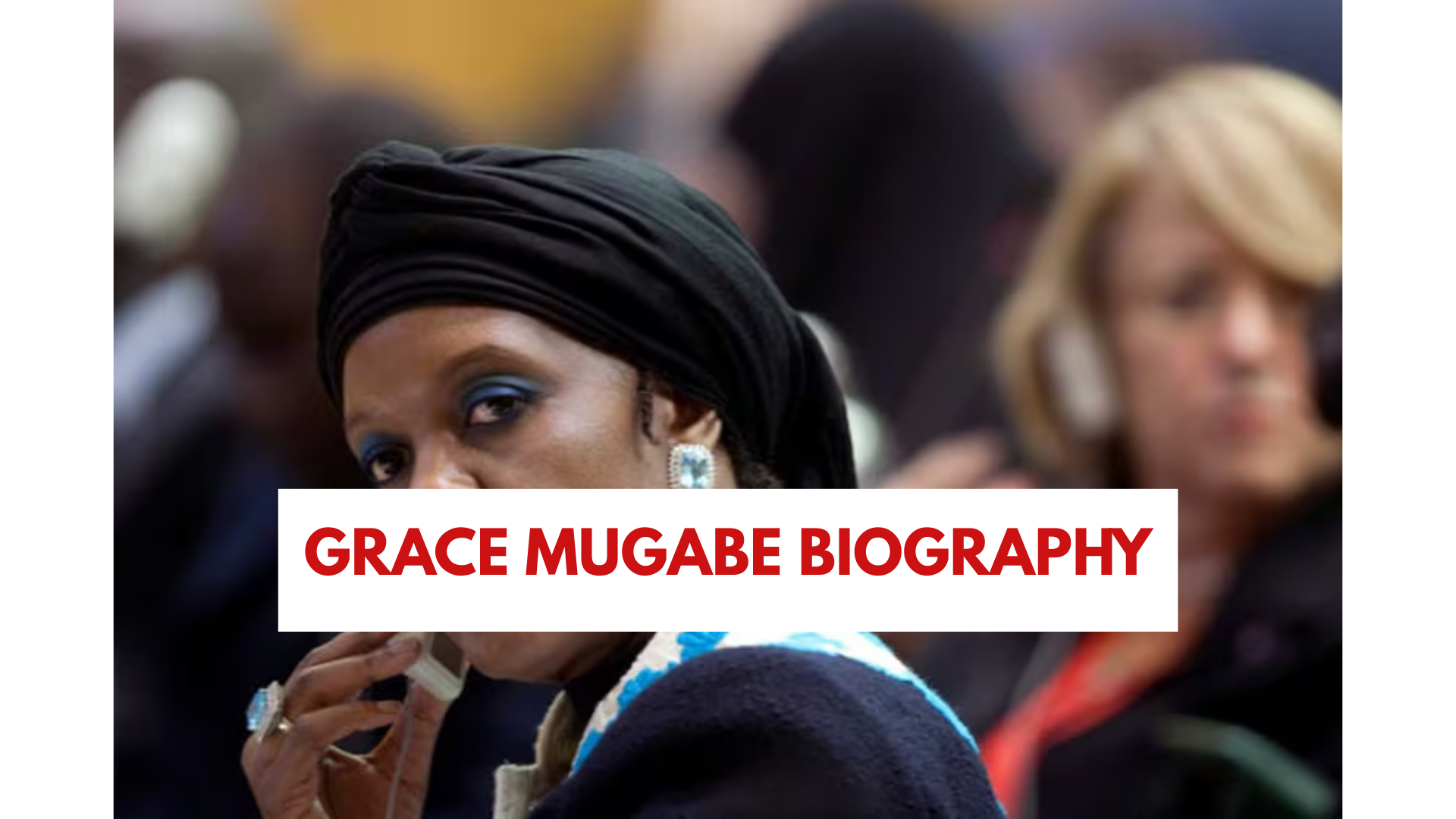
Grace Mugabe is one of the most talked-about figures in modern African political history.
Known for her influential role as Zimbabwe’s First Lady, her ambitions, controversies and rise from a secretary to one of the country’s most powerful women have captivated global attention.
In this biography, we take an in-depth look at her life, career, personal struggles, and the legacy she leaves behind.
Early Life
Grace Ntombizodwa Mugabe, born Grace Ntombizodwa Marufu on July 23, 1965, in Benoni, South Africa, was the fourth of five children in her family. In 1970, she moved to Rhodesia (now Zimbabwe) with her mother while her father stayed in South Africa to support the family. She attended primary school in Chivhu and later continued her secondary education in Manicaland.
Her upbringing was modest; she came from a family without political influence or wealth. Yet, destiny would place her in the corridors of power. Her early years in Zimbabwe shaped her tenacity and helped prepare her for the many challenges she would face later in life.
Marriage and Family Life
Grace first married Stanley Goreraza, a Zimbabwean air force pilot. The couple had a son, Russell Goreraza, in 1984. However, her life took a dramatic turn when she took a job as a secretary in the presidential office.
In the early 1990s, while still married to Goreraza, Grace began a relationship with President Robert Mugabe, who was about 40 years older than her. After the death of President Mugabe’s first wife, Sally, Grace and Robert married in 1996 in what was described as a lavish ceremony. The couple went on to have three children together: Bona, Chatunga, and Robert Jr.
Rise to Power
Once married, Grace’s influence expanded dramatically. Initially known primarily as the president’s wife, she became more prominent within Zimbabwe’s ruling party, the Zimbabwe African National Union-Patriotic Front (ZANU-PF). In 2014, she was appointed Secretary of the ZANU-PF Women’s League, a position that also made her a member of the party’s powerful politburo.
Her growing political influence led to factions forming within the party. A faction known as “Generation 40” (G40) supported her political ambitions, including the possibility that she might succeed her husband as president.
Life as First Lady
As First Lady of Zimbabwe from 1996 to 2017, Grace Mugabe became a divisive figure. She was frequently in the public eye, accompanying her husband on state visits and national celebrations. However, her lavish lifestyle drew both admiration and intense criticism.
Her penchant for luxury earned her nicknames such as “Gucci Grace” and “First Shopper.” She was known for expensive shopping sprees abroad and for owning high-end properties, which fueled controversies in a nation struggling with economic hardship.
Controversies and Scandals
Grace’s life wasn’t just about influence and luxury. She was also embroiled in scandals that made international headlines. One of the most infamous involved allegations that she assaulted a South African model in a Johannesburg hotel, an incident that drew diplomatic tensions because of her diplomatic immunity.
She was also involved in political infighting within ZANU-PF, particularly with Vice President Emmerson Mnangagwa, whom she supported removing from office in an effort to secure more power for herself. This action contributed to growing tensions that culminated in the 2017 military intervention.
The 2017 Coup and Political Fallout
In November 2017, Zimbabwe’s military placed President Mugabe under house arrest in what it described as an operation targeting “criminals” around him. Grace’s bid for power was a key factor in the army’s intervention. Faced with pressure, Mugabe resigned after nearly four decades in power. Grace was subsequently expelled from ZANU-PF along with other members of the G40 faction.
Her expulsion marked a significant fall from political grace. Once poised to shape Zimbabwe’s future, she found herself sidelined as the country’s politics shifted.
Life After Politics
After the coup, Grace Mugabe largely withdrew from the political spotlight. The 2017 events significantly diminished her influence, and she has remained out of active politics since. While some attempts have been made to maintain a public presence, she no longer holds political office.
Legacy and Impact
Grace Mugabe remains a controversial figure. Supporters credit her with charitable work and her role as First Lady. Critics argue that her ambition and controversial behavior contributed to political instability in Zimbabwe. Regardless of perspective, her life story is one of dramatic transformation—rising from modest beginnings to become one of the most powerful and polarizing figures in Zimbabwean history.
FAQs
1. Who is Grace Mugabe?
Grace Mugabe is a Zimbabwean entrepreneur and politician who served as the First Lady of Zimbabwe from 1996 to 2017.
2. Where was Grace Mugabe born?
She was born in Benoni, South Africa, on July 23, 1965.
3. How did Grace Mugabe become First Lady?
She became First Lady after marrying President Robert Mugabe in 1996.
4. Did Grace Mugabe hold political office?
Yes, she served as Secretary of the ZANU-PF Women’s League and was a key member of the party’s politburo.
5. What happened to her after the 2017 coup?
She was expelled from the ZANU-PF and lost her political influence following the coup that forced President Mugabe to resign.
Conclusion
Grace Mugabe’s life story reflects a remarkable journey from a modest upbringing to one of the most powerful tables in Zimbabwean politics. Her rise to prominence, combined with her controversial behavior and political ambitions, made her a subject of fascination worldwide. Although her political influence has waned since the 2017 coup, her legacy—in all its complexity—continues to be debated by scholars, political analysts, and the public alike.