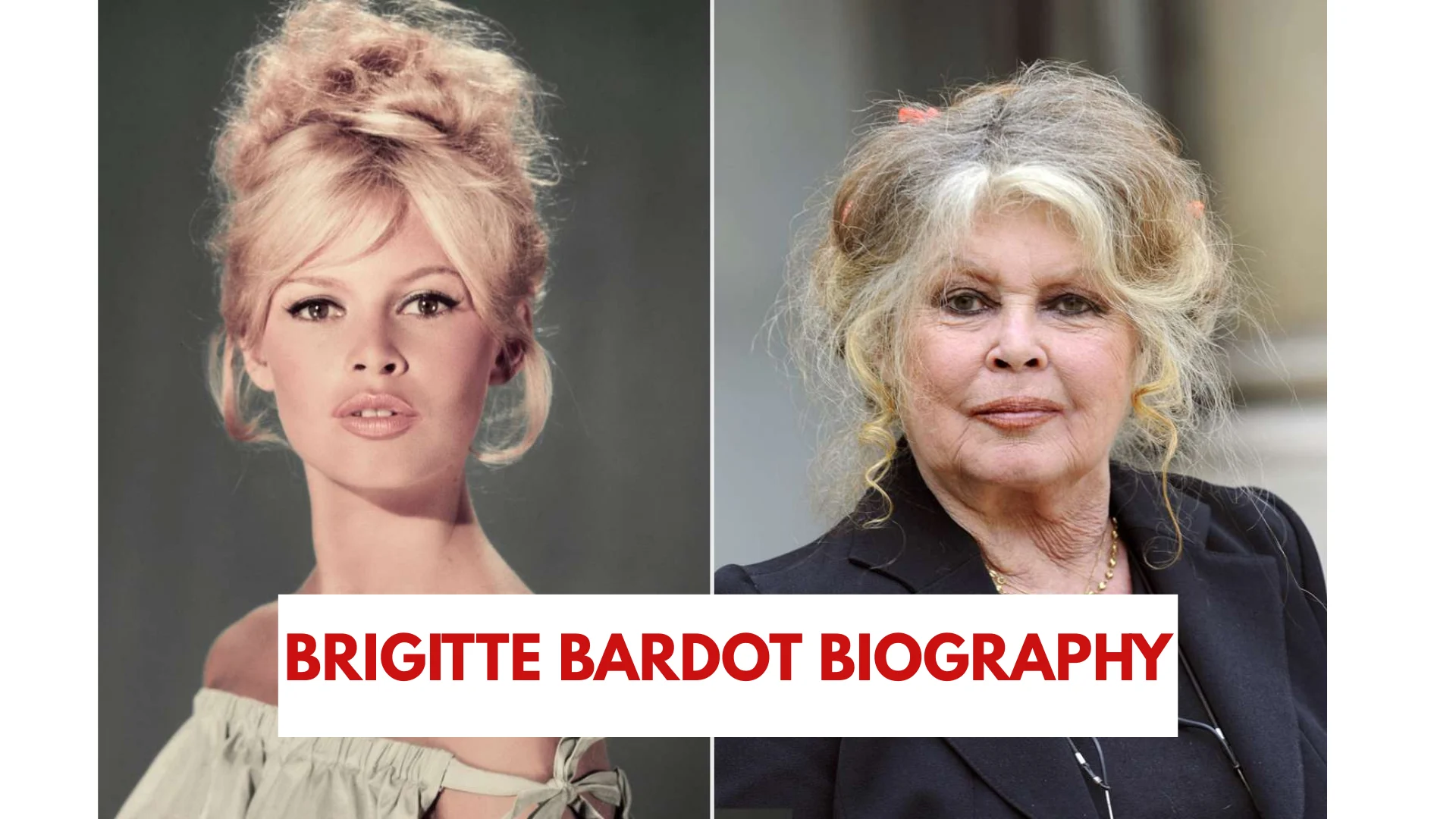
Brigitte Bardot is one of the most recognizable cultural icons of the 20th century. Known for her beauty, bold personality, and revolutionary impact on cinema and fashion, Bardot redefined femininity during the post-war era.
Beyond her successful acting career, she later reinvented herself as a passionate animal rights activist, earning both admiration and controversy.
This detailed Brigitte Bardot biography explores her early life, rise to fame, film career, personal life, activism, and enduring legacy.
Early Life and Background
Brigitte Anne-Marie Bardot was born on September 28, 1934, in Paris, France, into a conservative upper-middle-class family. Her father, Louis Bardot, was an engineer and industrialist, while her mother, Anne-Marie Mucel, instilled in her a strong sense of discipline.
As a child, Bardot studied classical ballet, a passion that shaped her posture, elegance, and early artistic ambitions. Although she did not initially dream of becoming an actress, her beauty and poise soon attracted attention. At the age of 15, she appeared on the cover of Elle magazine, a moment that would change her life forever.
Entry into Modeling and Film
Brigitte Bardot’s appearance in Elle caught the eye of film director Roger Vadim. Their meeting marked the beginning of both a professional and personal relationship. Bardot made her film debut in 1952 with Le Trou Normand (Crazy for Love), quickly gaining recognition for her natural charm and on-screen presence.
During the early years of her career, Bardot appeared in several French films, gradually building her reputation. However, it was not until the mid-1950s that she achieved international stardom.
Breakthrough and International Stardom
The defining moment in Brigitte Bardot’s career came in 1956 with the film And God Created Woman (Et Dieu… créa la femme), directed by Roger Vadim. The movie was groundbreaking, portraying a woman who was unapologetically sensual, independent, and free-spirited.
The film caused controversy but also propelled Bardot to global fame. She became a symbol of sexual liberation and youthful rebellion, challenging traditional norms of femininity. From that moment on, Brigitte Bardot was not just an actress—she was a cultural phenomenon.
Film Career Highlights
Throughout the late 1950s and 1960s, Brigitte Bardot starred in over 40 films, working with some of the most respected directors of her time. Notable films in her career include:
- La Vérité (1960)
- Contempt (Le Mépris, 1963), directed by Jean-Luc Godard
- Viva Maria! (1965), alongside Jeanne Moreau
- The Female (Une ravissante idiote, 1964)
Bardot’s performances were often praised for their authenticity and emotional depth. While critics sometimes underestimated her acting due to her beauty, her impact on European cinema is undeniable.
Fashion Icon and Cultural Influence
Beyond cinema, Brigitte Bardot left an indelible mark on fashion. Her effortless style, featuring gingham dresses, off-the-shoulder tops, ballet flats, and the famous “Bardot neckline,” became iconic.
She popularized the bikini after wearing it in And God Created Woman, influencing beach fashion worldwide. Her tousled blonde hair, winged eyeliner, and natural makeup look continue to inspire designers and fashion enthusiasts today.
Personal Life and Relationships
Brigitte Bardot’s personal life was often under intense media scrutiny. She married four times, including her marriage to Roger Vadim, actor Jacques Charrier, German millionaire Gunter Sachs, and politician Bernard d’Ormale.
She has one son, Nicolas-Jacques Charrier, born in 1960. Bardot has been open about her struggles with fame, depression, and the pressures of public life. Despite her glamorous image, her private life was often marked by emotional turmoil.
Retirement from Acting
At the age of 39, Brigitte Bardot made the surprising decision to retire from acting in 1973. At the height of her fame, she chose to step away from cinema, citing her discomfort with celebrity culture and the invasive nature of media attention.
Her retirement shocked fans but marked the beginning of a new chapter in her life.
Animal Rights Activism
After leaving the film industry, Bardot dedicated herself entirely to animal welfare. In 1986, she founded the Brigitte Bardot Foundation, an organization committed to protecting animals from cruelty, abuse, and exploitation.
She became a vocal advocate against seal hunting, animal testing, factory farming, and the use of animals in entertainment. Her activism has had a significant global impact, influencing legislation and raising awareness, though some of her outspoken views have sparked controversy.
Awards and Recognition
Brigitte Bardot has received numerous honors throughout her life, including recognition from animal welfare organizations worldwide. Though she distanced herself from traditional film awards, her cultural influence remains widely acknowledged.
She is often ranked among the greatest and most influential actresses in European cinema history.
Legacy and Influence
Brigitte Bardot’s legacy extends far beyond her filmography. She reshaped how women were portrayed on screen, inspired generations of artists, and challenged societal norms. As both a cinematic icon and an activist, her influence remains relevant decades later.
Even today, Bardot is celebrated as a symbol of freedom, individuality, and fearless self-expression.
FAQs About Brigitte Bardot
Q1: When was Brigitte Bardot born?
Brigitte Bardot was born on September 28, 1934.
Q2: What is Brigitte Bardot famous for?
She is famous for her acting career, fashion influence, and animal rights activism.
Q3: Why did Brigitte Bardot retire from acting?
She retired in 1973 due to her discomfort with fame and media intrusion.
Q4: Is Brigitte Bardot still alive?
Yes, Brigitte Bardot is alive and continues to support animal welfare causes.
Q5: What is the Brigitte Bardot Foundation?
It is an organization founded in 1986 to protect animals and fight against animal cruelty.
Conclusion
Brigitte Bardot’s journey from a Parisian ballet student to a global icon is nothing short of extraordinary. Her fearless embrace of individuality, combined with her artistic achievements and unwavering commitment to animal rights, cements her place in history. This Brigitte Bardot biography highlights not only her glamorous career but also her enduring impact on culture, fashion, and humanitarian activism.